



Custom boxes vs stock packaging — Compare costs, branding impact, unboxing experience, and ROI before you decide. Let’s say you ordered 500 units of your best-selling product. They’re sitting in your warehouse. You’ve worked hard on the formulation, the design, the launch strategy.
Then someone opens the package — and out comes a plain brown box with a generic label slapped on the side.
That moment matters more than most business owners realize. Your packaging is often the first physical experience a customer has with your brand. And that first impression is almost impossible to undo.
So the question isn’t really “Should I use custom or stock packaging?” — it’s “How much is that first impression worth to me?”
Let’s break it down honestly, so you can make the smartest decision for your business right now.
What’s the Difference Between Custom Boxes and Stock Packaging?
Before we get into the comparison, let’s define both clearly.
Stock packaging refers to pre-made, off-the-shelf boxes available in standard sizes and finishes — usually plain kraft brown or white, with no printing. You can find them at any packaging supplier, big-box store, or wholesale retailer. They’re produced in bulk by manufacturers and sold to anyone who needs them.
Custom packaging boxes are manufactured specifically for your brand. They’re printed with your logo, colors, messaging, and design. Custom boxes can also be made to a specific size, shape, material, and finish — giving you full control over how your product is presented and protected.
The difference isn’t just visual. It’s strategic.
The True Cost Comparison: Custom vs. Stock
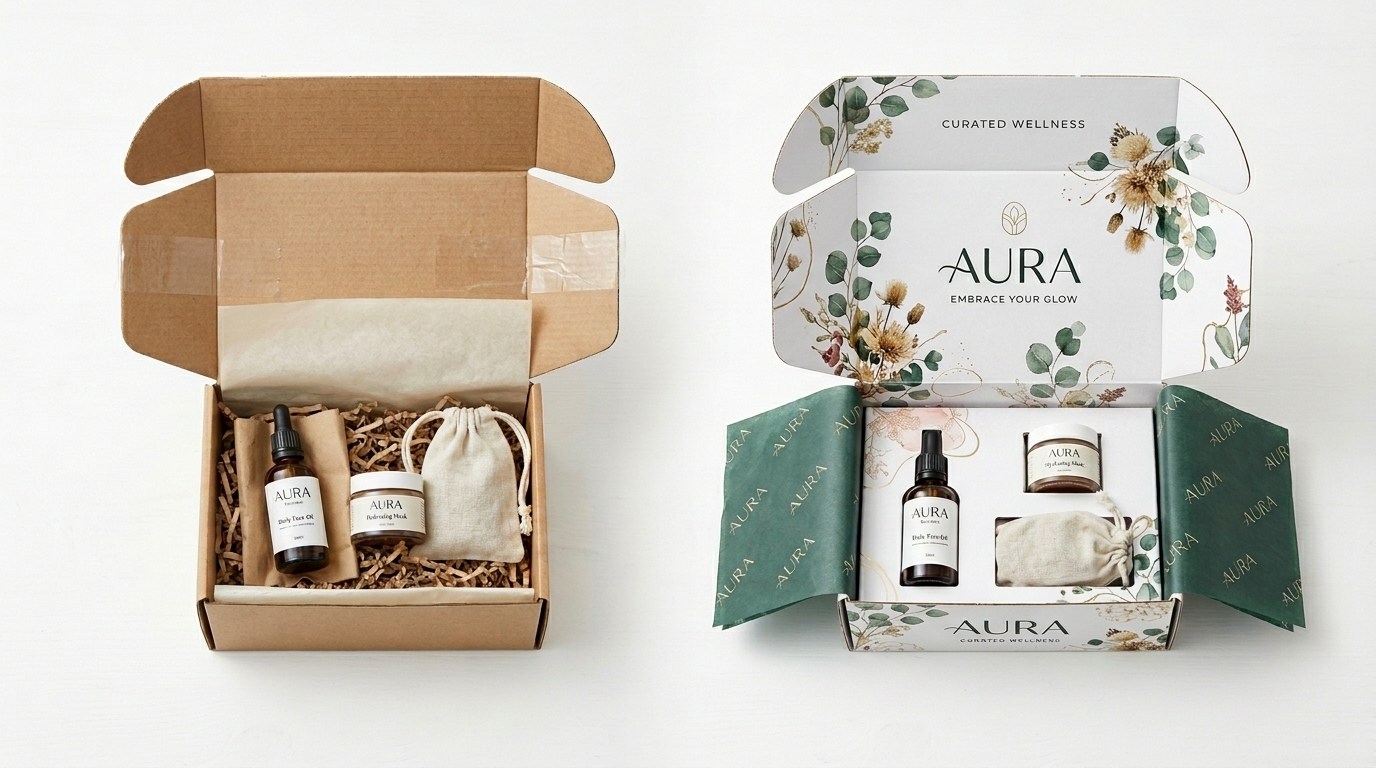
This is where most business owners get tripped up. Stock packaging looks cheaper on paper — but the full-picture math often tells a different story.
Stock Packaging Costs
- Low upfront unit price (often $0.30–$1.50 per box)
- No minimum order quantities at many suppliers
- Zero setup time — just order and ship
- No design investment required
Custom Packaging Costs
- Slightly higher per-unit cost at low quantities
- Can require minimums (though many companies, including Packestic, offer low minimums)
- Requires a design file (or a designer) — Packestic can assist with the designing
- Setup may involve die charges and plate charges — At Packestic, there are no setup or die charges.
Here’s the part most calculators miss:
Stock packaging silently costs you money in other ways:
- Returns and complaints from products damaged by ill-fitting boxes
- Lost repeat customers who don’t feel connected to your brand
- Lower perceived value means customers expect lower prices
- No referral effect — a plain box doesn’t get shared on social media
Custom packaging, by contrast, pays forward. It compounds. Every box is a brand impression.
Quick Cost Comparison Table
| Factor | Stock Packaging | Custom Packaging |
|---|---|---|
| Per-unit cost | Lower | Slightly higher at low MOQ |
| Die/plate charges | None | None at Packestic |
| Brand value added | None | High |
| Re-order flexibility | High | Moderate–High |
| Product protection | Generic fit | Engineered to your product |
| Customer experience | Neutral | Memorable |
| Social sharing potential | Very low | High |
| Long-term ROI | Low | High |
Branding Impact: The Gap Is Bigger Than You Think
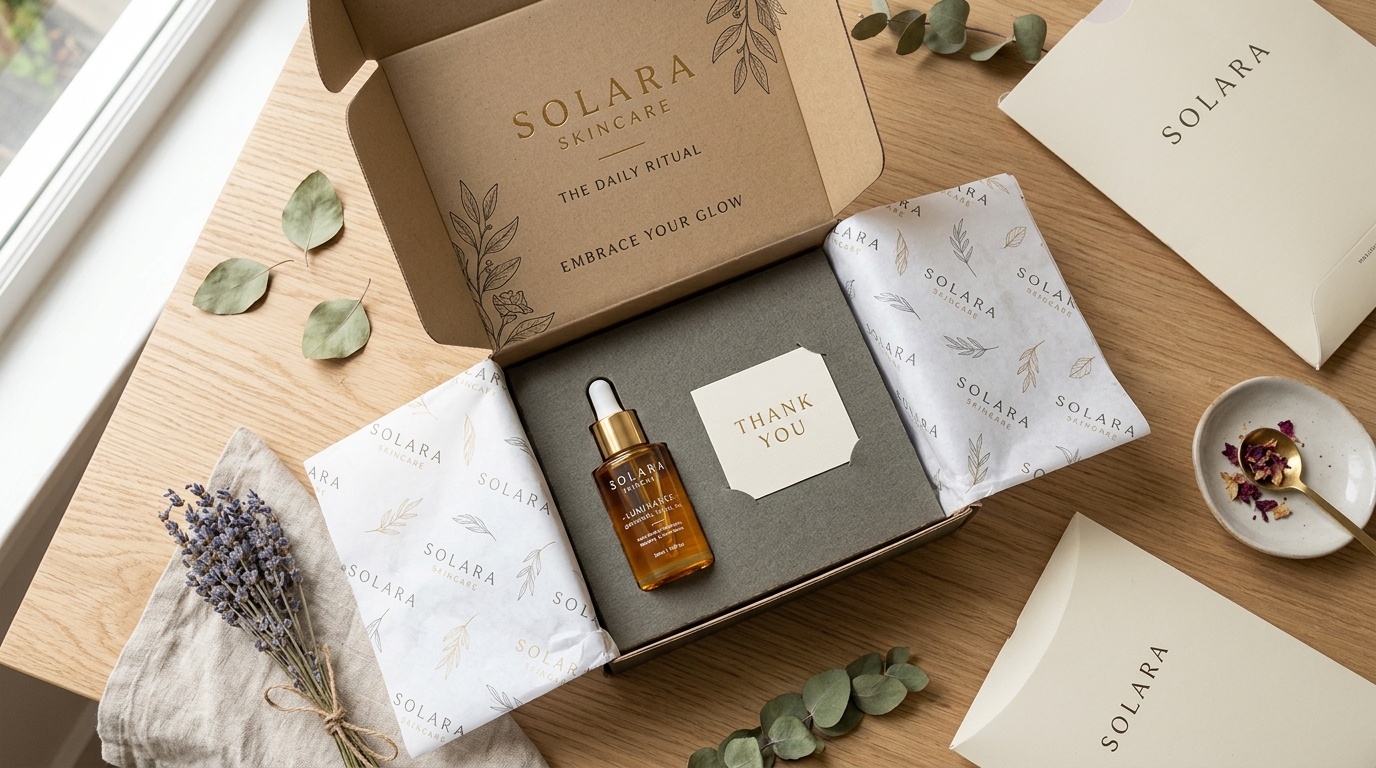
An Ipsos study found that 72% of American consumers say packaging design influences their purchasing decisions. And a Dotcom Distribution report revealed that 40% of consumers are likely to make repeat purchases from a brand that uses premium packaging.
That’s not a small number. That’s nearly half your customer base potentially choosing to come back — or not — based on the box you shipped in.
Stock packaging communicates: “We got your product to you. Job done.”
Custom packaging communicates: “We thought about you before you even opened this.”
For cosmetic brands, subscription boxes, food products, and boutique retail — this gap can make or break a product launch.
What Custom Packaging Actually Does for Your Brand
- Builds immediate recognition. Your box becomes a brand touchpoint, not just a container.
- Justifies premium pricing. Customers associate quality packaging with quality products.
- Creates consistency. Every customer gets the same experience, whether they ordered from your website or Amazon.
- Drives word-of-mouth. People share beautiful packaging. Plain boxes? Never.
Customer Perception and the Psychology of Packaging
There’s real science behind why packaging works.
Consumers make subconscious judgments within seconds of receiving a package. The texture, weight, colors, and overall presentation all send signals — about quality, reliability, and whether the brand respects them enough to invest in the experience.
Stock packaging can actually undermine a great product. If someone paid $45 for a face serum and it arrives in a plain brown mailer box with a printed label from your Dymo printer — the product may be excellent, but the experience has already fallen flat.
Custom packaging does the opposite. It elevates the product before it’s even seen.
This matters most for:
- Cosmetic and beauty brands — where luxury perception drives repeat sales
- Food and beverage brands — where safety, freshness, and brand trust are everything
- E-commerce brands — where packaging is the only physical touchpoint
- Subscription box companies — where the unboxing IS the product
- Retail businesses — where shelf presence determines whether customers pick up your product
"People don't just buy products. They buy how those products make them feel."
Your packaging is the first step in that feeling.
Shipping and Product Protection
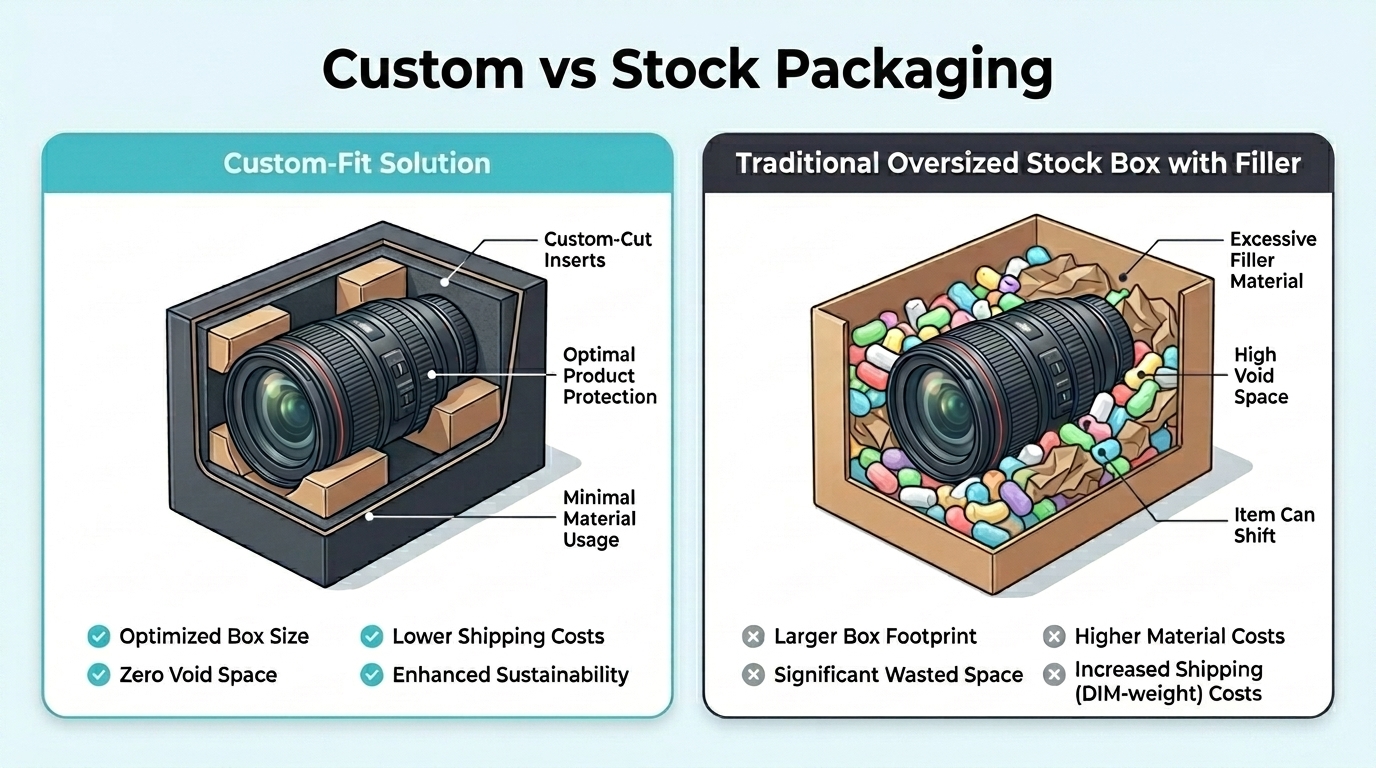
Here’s a practical advantage of custom packaging that often gets overlooked: fit.
Stock boxes come in standard sizes. If your product doesn’t match those sizes exactly, you’re either cramming it in or adding filler material (bubble wrap, foam peanuts, paper fill) to take up space.
That has real costs:
- More materials = higher per-shipment cost
- More weight = higher shipping rates
- Poor product protection = higher damage rates and returns
Custom boxes are engineered to fit your product. The result is:
- Tighter, more protective packaging
- Less wasted space (and lower dimensional weight for shipping)
- A cleaner, more professional unboxing experience
- Fewer damaged goods and customer complaints
For fragile products — glass candle jars, ceramics, skincare bottles, food items — this isn’t a luxury. It’s a loss-prevention strategy.
The Unboxing Experience: Your Hidden Marketing Channel
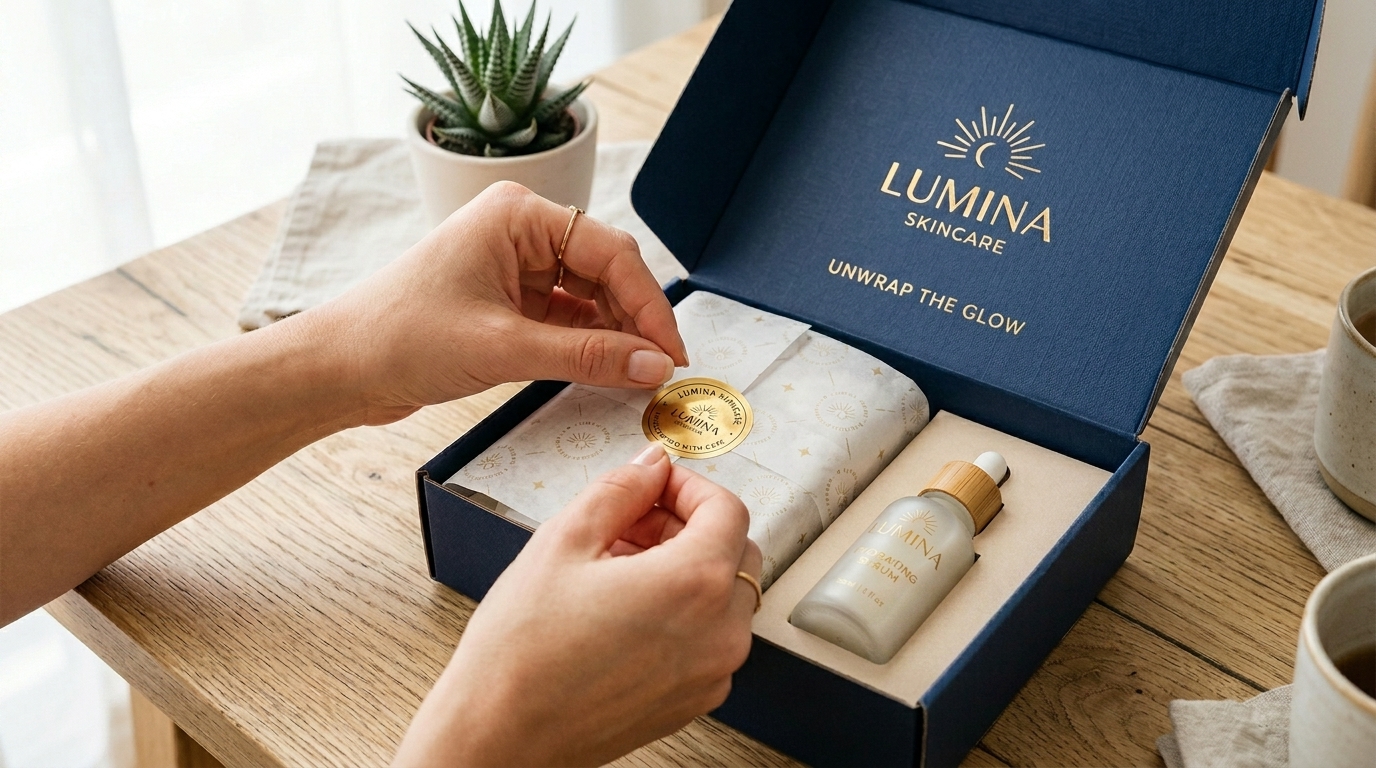
Unboxing videos are one of YouTube and TikTok’s most consistently popular content categories. Millions of people watch them every day.
And here’s the key insight: they’re not watching unboxing videos of plain brown boxes.
The brands that get shared, filmed, and featured in unboxing content are the ones that invested in the experience. A beautiful custom box with branded tissue, a thank-you card, and a tight product fit isn’t just packaging — it’s user-generated content waiting to happen.
For small businesses and e-commerce brands, this is free marketing at scale. Every customer who films your package and posts it is reaching their entire audience — without you spending a dollar.
Stock packaging has never gone viral. Custom packaging does it every day.
What Creates a Great Unboxing Moment
- Custom printed exterior with strong brand colors
- Branded interior print or tissue paper
- Secure, tight product fit — nothing rattling around
- A personal touch (thank-you card, branded sticker, discount insert)
- Clean, premium feel throughout
This is the kind of experience that turns first-time buyers into loyal customers — and loyal customers into brand ambassadors.
Sustainability: The Modern Packaging Consideration
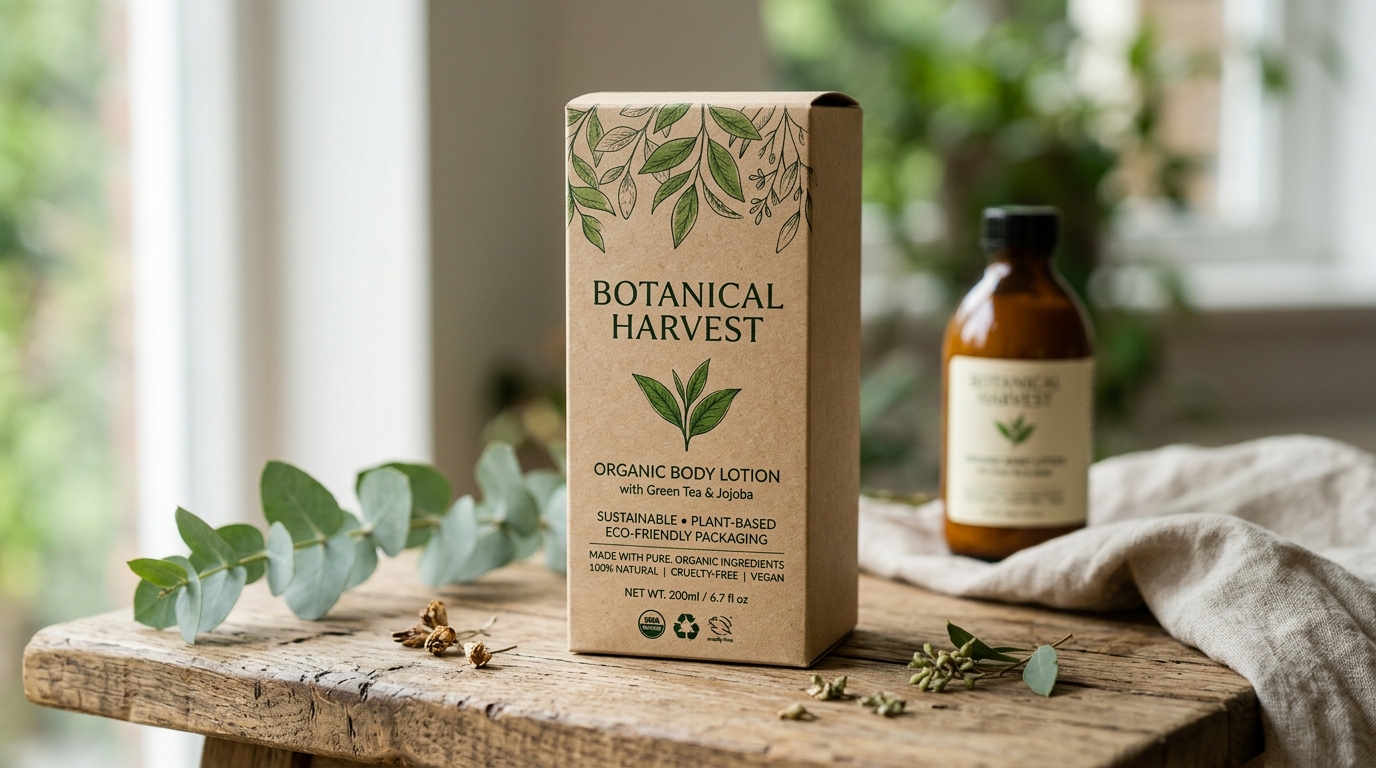
One of the most common objections to custom packaging is the environmental impact. But here’s the reality: custom packaging can be more sustainable than stock, not less.
Here’s why:
Right-sized boxes reduce waste. When your custom box fits your product perfectly, you’re not shipping a box full of air — and you’re not using excess fill materials.
You control the materials. With custom packaging, you choose recycled content, FSC-certified paper, soy-based inks, and compostable coatings. With stock packaging, you take whatever the supplier made.
You can print your sustainability story. Custom packaging lets you tell customers about your eco-commitments — right on the box. That matters to today’s conscious consumer.
A Nielsen study found that 73% of global consumers say they would definitely or probably change their consumption habits to reduce environmental impact. For brands targeting millennial and Gen Z buyers especially, sustainable packaging messaging is no longer optional — it’s expected.
Scalability: Which Option Grows With Your Business?
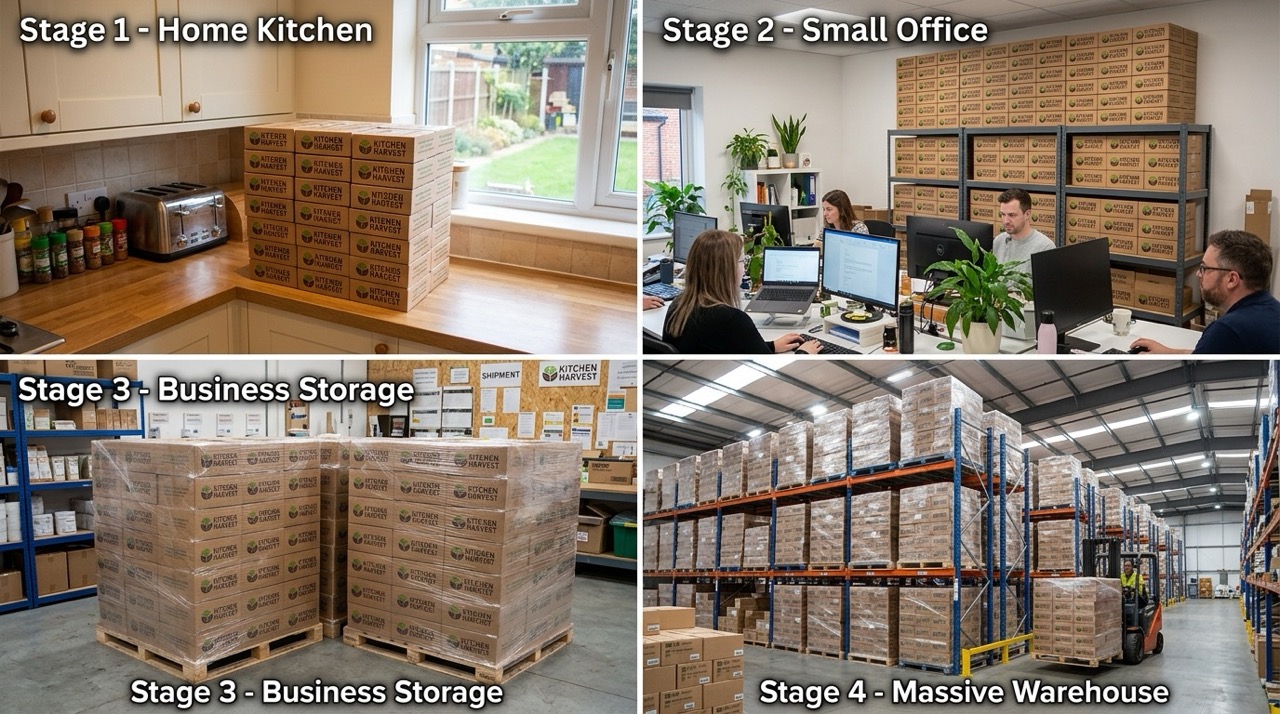
business-growth-with-custom-packaging
One of the most common misconceptions is that custom packaging is only for large companies with big budgets and high order volumes.
That’s no longer true.
Modern packaging manufacturers — including Packestic — offer low minimum order quantities, which means you can start with custom printed packaging even if you’re shipping 50–100 boxes a month. You don’t have to wait until you’re a million-dollar brand to look like one.
How Each Option Scales
| Stage | Stock Packaging | Custom Packaging |
|---|---|---|
| Starting out (< 100 units/mo) | Easy entry, zero brand value | Now accessible with low MOQs |
| Growing (100–1,000 units/mo) | Starts to hurt brand perception | Ideal — per-unit cost drops with volume |
| Scaling (1,000+ units/mo) | Brand liability | Per-unit costs become very competitive |
| Established brand | Actively hurts brand equity | Non-negotiable investment |
The businesses that win long-term are the ones that start building brand equity early — not the ones that wait until they “can afford” it. With low MOQ options and no die or plate charges at Packestic, there’s very little reason to wait.
Who Should Use Stock Packaging?
In the interest of honesty: there are situations where stock packaging makes sense.
- You’re in a very early testing phase and don’t know if a product will sell
- You’re shipping internal or B2B items where unboxing experience isn’t relevant
- You need emergency inventory in 24 hours and can’t wait for production
- You’re temporarily bridging a gap between custom packaging runs
For anything beyond those scenarios? Custom packaging almost always makes more financial and strategic sense — even for small businesses.
Who Should Use Custom Packaging?
If any of the following describe your business, custom printed boxes aren’t a luxury — they’re a growth tool:
- You sell physical products to end consumers (retail, e-commerce, DTC)
- You’re building a brand, not just moving inventory
- You want repeat customers and referrals
- You sell products where presentation matters (cosmetics, food, gifts, subscriptions)
- You want to compete with larger brands on shelf or online
- You’re selling at a price point above commodity
That covers the vast majority of small businesses, e-commerce sellers, cosmetic brands, food brands, and retail companies in the USA.
Why Packestic for Custom Packaging?
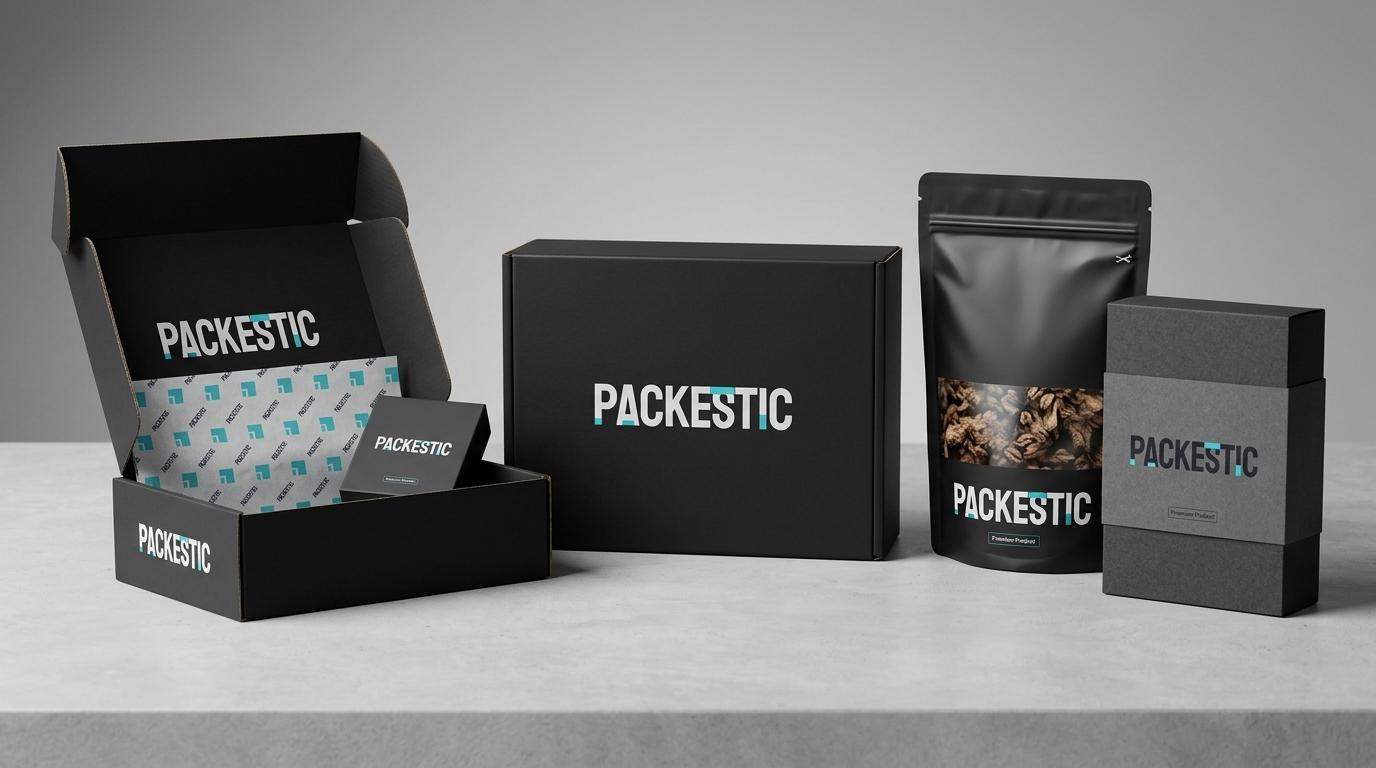
After spending 9+ years helping USA businesses make the switch from stock to custom packaging, we founded Packestic — and we’ve made it as easy and affordable as possible.
Here’s what sets us apart:
- Exclusively 5-star reviews — our customers’ results speak for themselves
- Free shipping across the USA — no hidden freight costs
- Beat My Price guarantee — if you find a lower price, we’ll beat it
- Fast turnaround: 4–6 business days for Rush Orders — because your business can’t wait
- No die charges. No plate charges. — you pay for what you actually need
- Low minimums — custom packaging is accessible from day one
- In-house USA production — quality control and faster lead times
Whether you’re launching your first product or scaling a growing brand, we’ll help you get custom printed boxes that look incredible and ship fast.
The Bottom Line: Custom Boxes vs. Stock Packaging
Let’s make this simple.
Stock packaging is a temporary solution. It gets product from A to B. It does nothing for your brand, nothing for customer loyalty, and nothing for your ability to charge what your product is worth.
Custom packaging is a business investment. It builds recognition, commands premium pricing, drives repeat purchases, and turns customers into advocates.
The question isn’t whether you can afford custom packaging. With today’s low minimum orders, competitive pricing, and zero setup charges — the question is whether you can afford not to.
Your product deserves better than a plain brown box. And so does your brand.
Frequently Asked Questions
Is custom packaging more expensive than stock packaging?
Custom packaging has a slightly higher per-unit cost at very low quantities, but the gap narrows significantly with volume. When you factor in better product protection (fewer returns), higher perceived value (higher price points), and repeat purchase rates — custom packaging typically delivers a better overall ROI than stock. Many companies like Packestic also offer no die or plate charges, which removes a major upfront cost barrier.
What’s the minimum order quantity for custom printed boxes?
It varies by manufacturer. At Packestic, we offer low minimum order quantities, making custom packaging accessible for small businesses and startups — not just large-scale brands.
How long does custom packaging take to produce?
At Packestic, our standard turnaround is 10–12 business days after artwork approval. This is significantly faster than most custom packaging manufacturers in the USA.
Can custom boxes be sustainable and eco-friendly?
Yes. Custom packaging gives you full control over materials — including recycled content, FSC-certified board, soy-based inks, and biodegradable coatings. You also eliminate excess packaging materials typically needed to fill oversized stock boxes.
Is custom packaging only for large businesses?
No. With low minimum order quantities now widely available, custom packaging is accessible to businesses at any stage. Starting with branded packaging early actually accelerates brand growth and helps small businesses compete with established players.
What types of custom packaging does Packestic offer?
Packestic produces a wide range of custom printed packaging including mailer boxes, candle boxes, rigid boxes, Mylar bags, paper cups, custom stickers, and more — all with in-house USA production and free shipping nationwide.
Does custom packaging help with unboxing videos and social media?
Absolutely. Branded, well-designed packaging is far more likely to be filmed, photographed, and shared than plain stock boxes. User-generated unboxing content is one of the most cost-effective forms of free marketing available to product businesses today.
Ready to Make the Switch?
Your packaging is working for you or against you — there’s no neutral ground.
If you’re ready to stop sending plain boxes and start sending brand experiences, Packestic is here to help. We’ll get you a fast, free quote with no pressure and no setup charges.
Get Your Free Custom Packaging Quote → packestic.com/get-quote/