



You’ve invested everything in your product — the formulation, the branding, the positioning. But the moment a customer holds your packaging in their hands, a decision is already forming.
Is this worth it?
Luxury brands understand something that mass-market companies often overlook: packaging isn’t just a container. It’s a physical extension of your brand promise. And nothing communicates premium quite like a rigid box.
In this guide, we’ll walk through everything you need to know about luxury rigid boxes — what they are, why the world’s most respected brands use them, the different types available, and how the right rigid packaging can directly increase your perceived value, customer retention, and repeat purchase rate.
Whether you’re launching a new luxury product line, rebranding an existing one, or finally ready to stop losing customers to a competitor with better packaging — this guide is for you.
What Are Rigid Boxes?
Rigid boxes — also called setup boxes or rigid setup boxes — are a category of premium packaging constructed from thick, dense paperboard (typically 1,200 to 3,000 microns) that does not fold flat after assembly.
Unlike standard folding cartons that collapse for shipping and pop open at the customer’s location, rigid boxes are permanently structured. They hold their shape under pressure. They feel substantial. They communicate permanence and quality before the product inside is even seen.
The construction of a rigid box typically involves:
- A sturdy chipboard core that provides structural integrity
- A decorative wrap (paper, fabric, or specialty material) adhered to the exterior
- An interior liner or insert that cradles the product
- Optional functional hardware like magnetic closures, ribbon pulls, or hinged mechanisms
The result is a package that doesn’t just contain a product — it presents it.
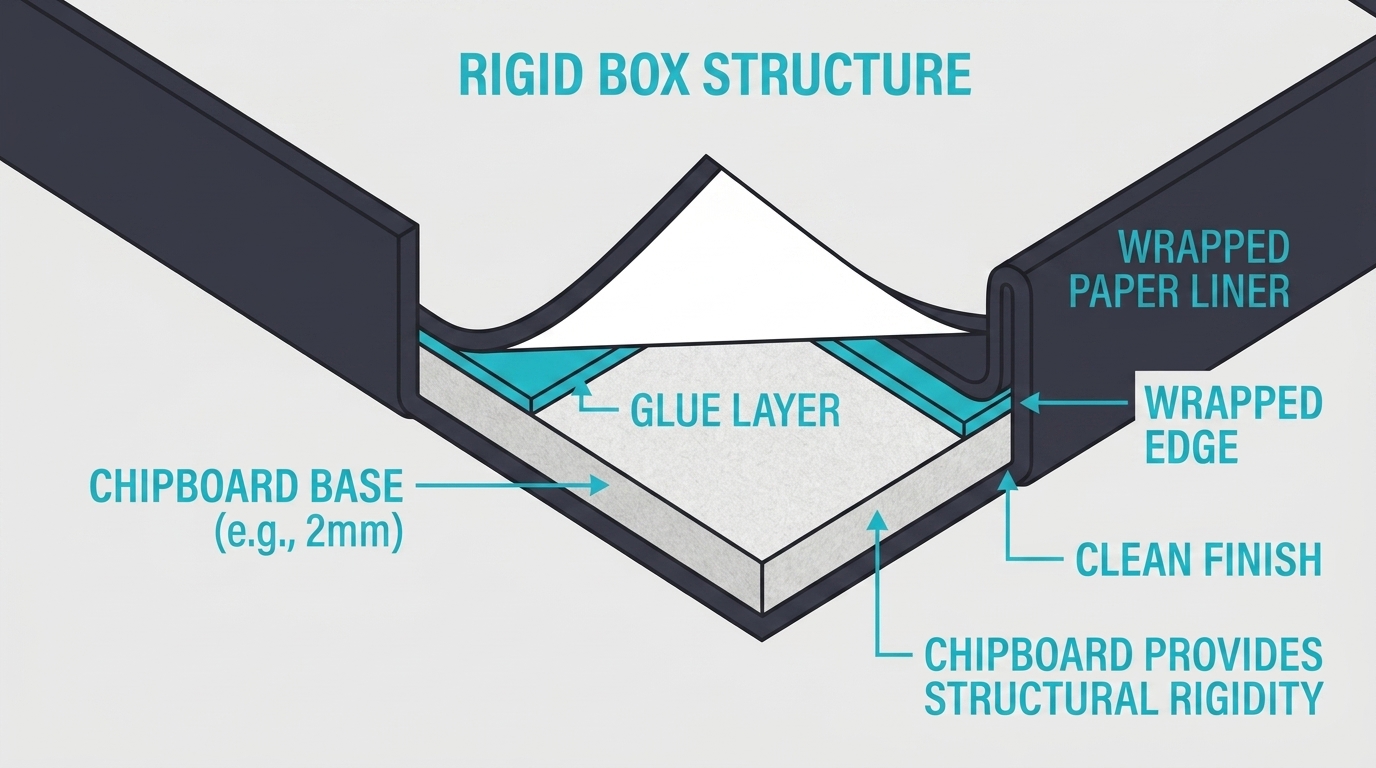
Rigid boxes are made using thick chipboard wrapped with printed paper to create premium, durable packaging.
Why Luxury Brands Choose Rigid Packaging
There’s a reason why every major luxury brand — from high-end perfume houses to premium jewelry labels to artisan skincare lines — ships in rigid boxes.
1. First Impressions Happen Before the Product Is Seen
When a customer receives a rigid box, they notice the weight, the texture, the solidity. These sensory signals trigger an immediate psychological response: this is something of value. Research in consumer psychology consistently shows that packaging weight and rigidity correlate directly with perceived product quality — even before the box is opened.
2. Rigid Packaging Signals Brand Confidence
Investing in premium packaging tells your customer — and the market — that you stand behind what’s inside. Brands that cut corners on packaging inadvertently signal that the product itself may be cutting corners too.
3. Unboxing Has Become a Marketing Channel
With over 90,000 unboxing videos uploaded to YouTube each month, your packaging is now a piece of shareable content. Rigid boxes photograph beautifully, film dramatically, and create the kind of slow-reveal unboxing experience that drives organic social media coverage. Your packaging can generate marketing impressions long after the sale.
4. Customer Retention and Reuse Value
Unlike folding cartons that get recycled or discarded, luxury customers keep rigid boxes. They store jewelry in them. They reuse them for gifting. Every time they see your branded box on their shelf, it reinforces brand familiarity and loyalty. A rigid box becomes a long-term brand touchpoint — one your customers opted into voluntarily.
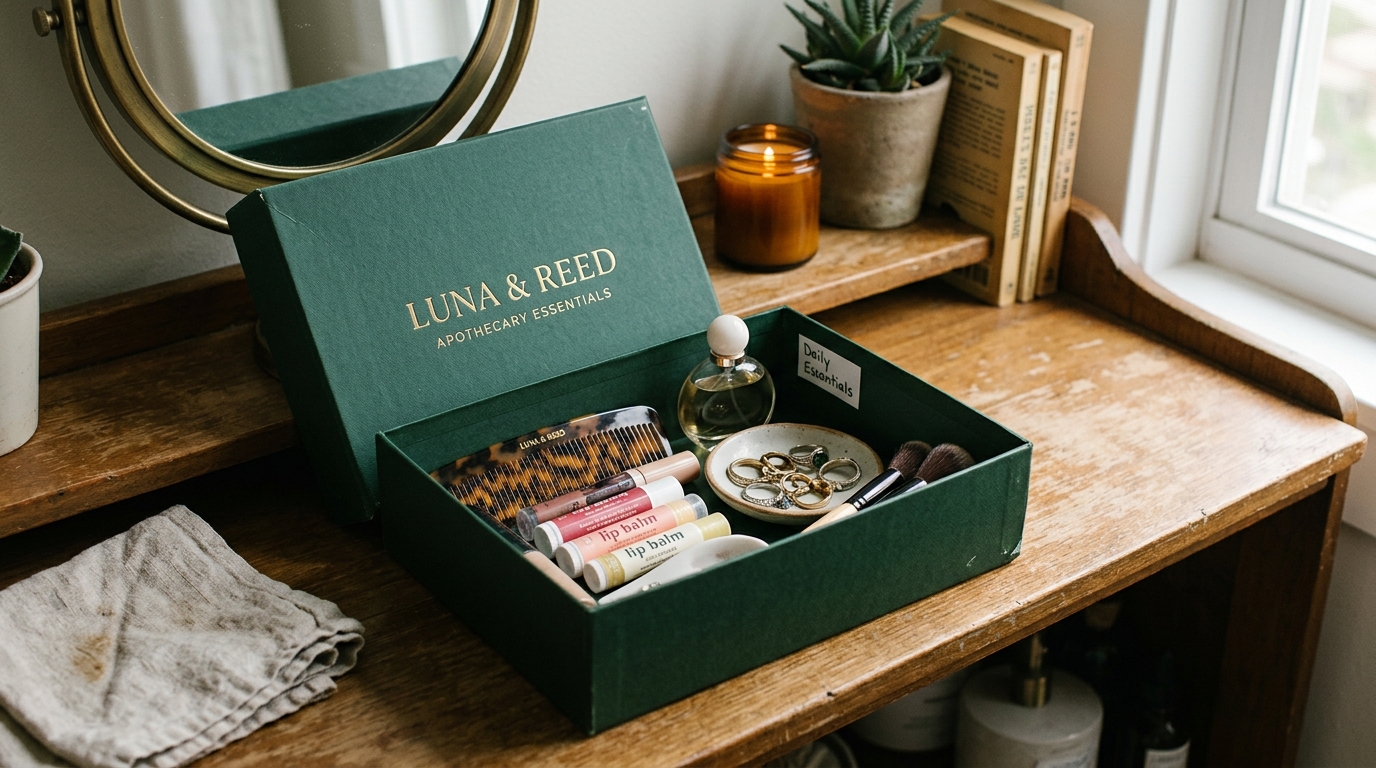
High-quality rigid boxes are often reused by customers, increasing brand visibility and perceived value long after purchase.
Rigid Boxes vs. Folding Cartons: What’s the Difference?
Understanding the distinction between rigid boxes and folding cartons helps you make a more strategic packaging decision for your brand.
| Feature | Rigid Boxes | Folding Cartons |
|---|---|---|
| Construction | Thick chipboard, permanently assembled | Thin paperboard, folds flat |
| Wall thickness | 1,200–3,000+ microns | 200–600 microns |
| Perceived quality | Premium / luxury tier | Standard / mass market |
| Unboxing experience | Elevated, deliberate reveal | Functional |
| Product protection | Superior — rigid walls, insert-ready | Moderate |
| Reuse by customer | High — often kept | Low — typically discarded |
| Unit cost | Higher per unit | Lower per unit |
| Best for | Luxury, gifting, high-value products | FMCG, high-volume retail |
| Custom finishing options | Extensive | Moderate |
The short version: If your product sells for $30 or less, folding cartons may be appropriate. If your product commands a premium price point, your packaging needs to match that promise. Rigid boxes close that gap.
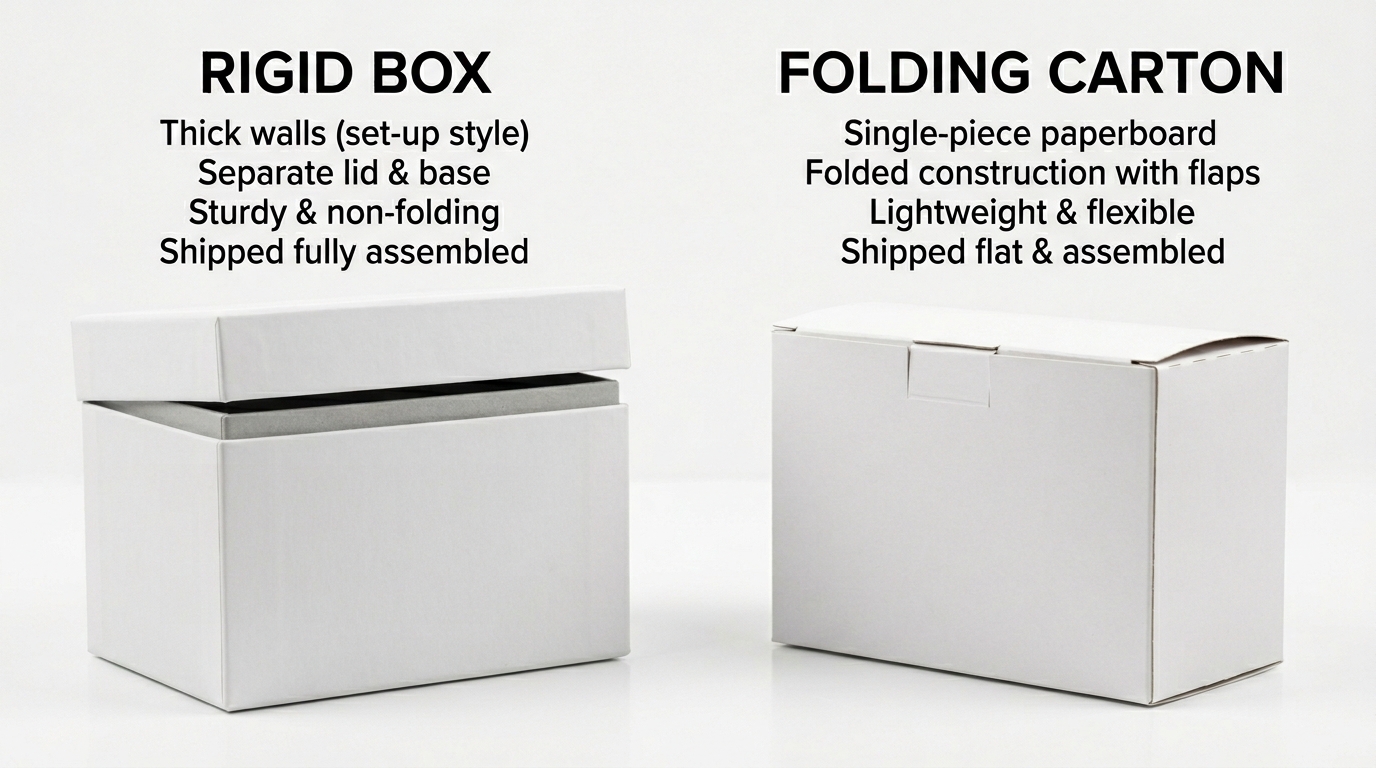
Rigid boxes offer premium durability and a luxury feel, while folding cartons provide lightweight and cost-effective packaging solutions.
Types of Rigid Boxes
Rigid packaging comes in several configurations, each suited to different products and brand experiences. Here are the most popular styles:
1. Magnetic Closure Rigid Boxes
The most popular rigid box style for luxury brands. A magnetic closure box features embedded magnets in the lid and base that create a satisfying, secure snap when closed. The opening experience is deliberate and tactile — exactly what luxury customers expect.
Best for: Cosmetics, jewelry, electronics accessories, premium apparel, corporate gifting
The magnetic pull isn’t just functional — it’s theatrical. That single click communicates precision engineering to the person opening it.
2. Drawer / Sliding Rigid Boxes
Also called a “matchbox-style” or “sleeve-and-tray” box, the drawer rigid box features an outer sleeve from which an inner tray slides out. The reveal is slow, smooth, and highly satisfying.
Best for: Jewelry, watches, fragrances, gift sets, subscription boxes
3. Shoulder-Neck Rigid Boxes
The shoulder-neck box (sometimes called a “setup box with a shoulder”) features a recessed inner lid that fits precisely into the outer base — creating a seamless, tailored fit with excellent product visibility when opened.
Best for: Perfumes, candles, premium skincare, high-end confectionery
4. Collapsible Rigid Boxes
Collapsible rigid boxes offer the aesthetic of a traditional rigid box with the added benefit of flat-pack shipping — making them ideal for e-commerce brands that need to manage warehouse space and shipping costs without sacrificing presentation.
The customer receives a box that assembles itself as they open it, creating a clever first-touch experience.
Best for: E-commerce luxury brands, subscription boxes, DTC beauty brands
5. Hinged Lid Rigid Boxes
A hinged lid box opens like a book or a chest — attached at the back with a living hinge. The lid swings open to reveal the product inside, often cradled in a custom insert. These boxes have an heirloom quality that makes them particularly suited to gifting contexts.
Best for: Jewelry, high-end chocolates, luxury watches, keepsake packaging
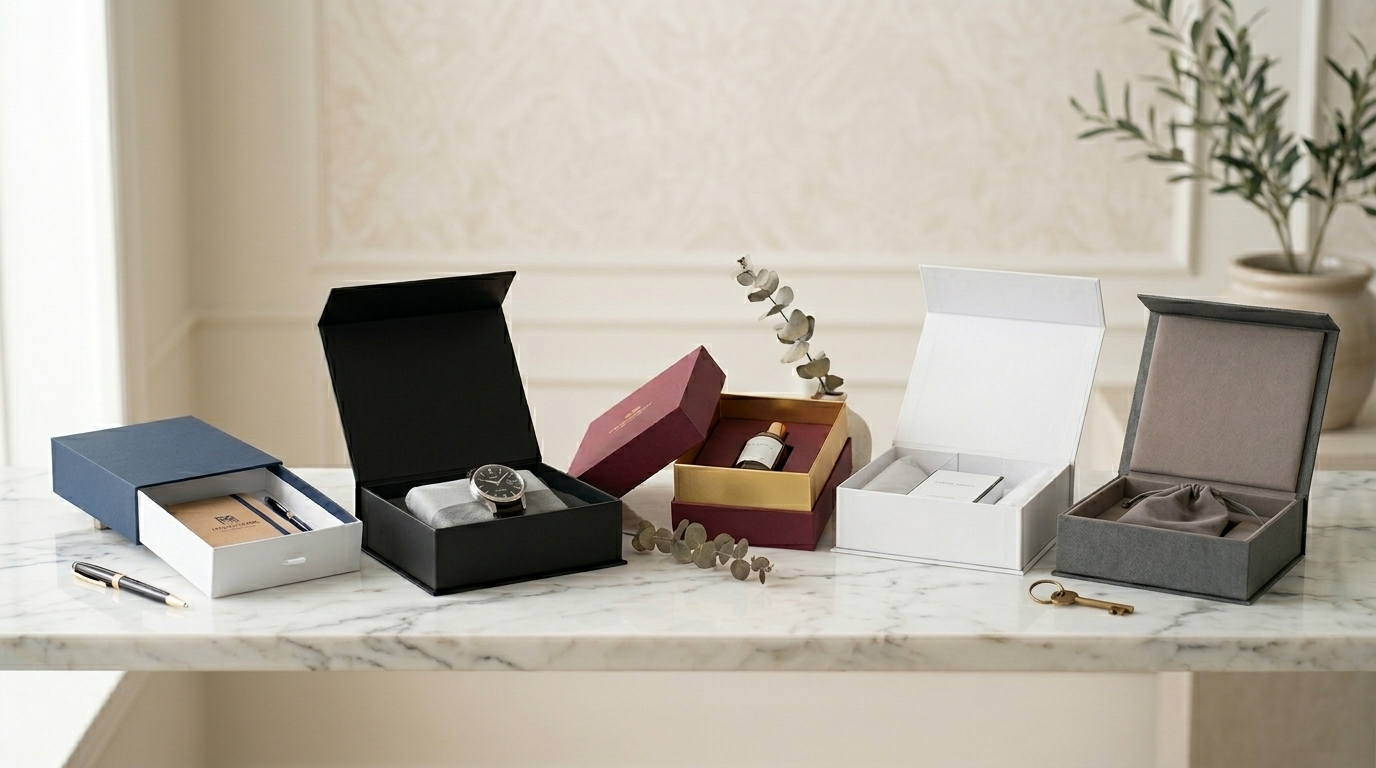
Different rigid box styles used for luxury retail, cosmetics, watches, jewelry, gifting, and premium product packaging.
Materials Used in Luxury Rigid Boxes
The quality of a rigid box starts with the materials. Here’s what goes into premium rigid packaging:
Chipboard Core: The structural backbone of every rigid box. Premium rigid boxes use thick, dense chipboard (1,200 to 3,000+ microns). Higher micron count means greater rigidity, better drop resistance, and a more substantial feel in hand.
Exterior Wrap Papers: The chipboard is wrapped in specialty papers that define the box’s look and feel:
- Art paper — Smooth, high-gloss or matte finish, ideal for full-color printing
- Kraft paper — Natural, earthy tone for eco-conscious luxury brands
- Textured papers — Linen, leatherette, or felt-effect finishes for a tactile premium experience
- Specialty materials — Velvet, fabric wraps, and metallic papers for ultra-luxury applications
Interior Liners: The interior of a luxury rigid box is typically lined with matching or contrasting paper, fabric, or flocked material. Custom inserts made from foam, molded pulp, or custom-die-cut board cradle the product securely and create a perfectly fitted presentation.
Printing & Finishing Options for Rigid Boxes
This is where your brand truly comes to life. The right combination of print and finish transforms a rigid box from a container into a brand experience.
Foil Stamping
Metallic foil — gold, silver, rose gold, holographic — applied under heat and pressure directly to the box surface. Foil stamping creates unmistakable brilliance and depth that can’t be replicated with standard printing. It signals luxury immediately. Most premium logos, wordmarks, and accent patterns are foil-stamped.
Embossing & Debossing
Embossing raises your design element above the surface; debossing presses it in. Both create a tactile dimension that rewards touch. A debossed logo on a matte-laminated rigid box is one of the most sophisticated branding applications in packaging — subtle, tactile, and unmistakably premium.
Spot UV Coating
Spot UV applies a high-gloss, raised varnish to selective areas of the box — your logo, a pattern, or a specific design element. Against a matte background, spot UV creates a striking contrast that makes your branding visually dynamic under light.
Soft-Touch / Matte Lamination
A soft-touch laminate gives your box a velvety, almost rubberized texture that customers instinctively want to hold. Paired with foil stamping or spot UV, matte lamination is the finishing combination most associated with ultra-luxury packaging.
Full-Color CMYK and Pantone Printing
For brands requiring precise color matching, Pantone spot color printing ensures your brand colors are reproduced exactly — critical for cosmetics, fashion, and beauty brands with strict brand guidelines.
Working on a luxury packaging project? Packestic offers all of the above finishing options on custom rigid boxes — manufactured in-house in the USA with no die charges and free shipping nationwide. Request a Custom Quote →
The Psychology of Luxury Packaging and Perceived Value
There’s a well-documented phenomenon in consumer psychology called the packaging halo effect: when packaging quality is elevated, consumers consistently rate the product inside as higher quality — regardless of whether the product itself has changed at all.
This isn’t theoretical. Studies from the Journal of Consumer Psychology and the Journal of Retailing have demonstrated repeatedly that tactile packaging cues — weight, texture, resistance — directly influence purchase intent, willingness to pay, and brand trust.
Here’s what this means for your business:
- A product in a rigid box is perceived as worth more than the same product in a folding carton
- Customers who receive premium packaging are more likely to share their experience on social media
- Unboxing satisfaction directly correlates with repeat purchase intent
- Gifting occasions heavily favor products in rigid packaging — gifters want packaging that communicates generosity
Luxury packaging isn’t an expense. It’s a revenue driver with measurable ROI.
The Unboxing Experience: Why It Matters More Than Ever
The unboxing experience isn’t a trend. It’s a permanent shift in how customers relate to products and brands.
When a customer receives a luxury rigid box, they experience a sequence of emotional triggers before they ever see the product:
- Weight — The box is heavier than expected. Something valuable is inside.
- Resistance — The lid opens with deliberate control, not a floppy flip. This was made with care.
- Sound — The magnetic snap or the smooth drawer slide. Precision.
- Texture — The matte finish, the embossed logo. This brand understands quality.
- Reveal — The product is cradled, presented, and protected. I made the right choice.
Each of these micro-moments builds emotional investment in your brand. And in the age of short-form video, these are the exact sensory moments that drive millions of views on TikTok, Instagram Reels, and YouTube.
Your rigid box is an unboxing machine. Design it accordingly.
Product Protection and Durability
Luxury products are high-value products. They deserve packaging that protects that value throughout the supply chain.
Rigid boxes offer structural superiority over all other paper-based packaging:
- Crush resistance — The thick chipboard walls resist compression under stacking and shipping pressure
- Corner integrity — Unlike folding cartons, rigid box corners don’t collapse under impact
- Moisture resistance — Premium wrap papers and laminations provide a degree of moisture resistance that standard cartons cannot
- Custom insert protection — Foam, molded pulp, and paperboard inserts can be precision-engineered to hold your product immovably in place
For brands selling fragile items — glass perfume bottles, delicate ceramics, precision jewelry — the structural integrity of a rigid box isn’t just a luxury. It’s a necessity that directly reduces returns and damage complaints.
Sustainability and Rigid Box Packaging
Sustainability is no longer optional in premium packaging. Today’s luxury consumer is increasingly conscious of the environmental footprint of the products they buy — and they hold premium brands to a higher standard.
The good news: rigid boxes are among the most sustainable premium packaging options available.
Why rigid boxes can be an eco-forward choice:
- High recyclability — Rigid boxes are predominantly paper-based and recyclable in most standard recycling streams
- Longevity reduces waste — Because customers keep rigid boxes and reuse them, the per-use environmental cost is significantly lower than single-use packaging
- Sustainable material options — FSC-certified boards, recycled chipboard, water-based adhesives, and Kraft wrap papers are all available
- Less plastic — Quality rigid boxes can be designed with zero plastic content, using ribbon pulls, paper liners, and paper inserts instead of plastic tray inserts
- Carbon offset considerations — USA-based production reduces shipping emissions compared to overseas manufacturing
When designing your rigid box, sustainability can be a brand story as much as an operational decision. Packaging that communicates both luxury and environmental responsibility resonates deeply with today’s premium consumer.
Cost Factors: What Determines the Price of Rigid Boxes?
Rigid boxes cost more per unit than folding cartons — that much is known. But understanding what drives the cost of custom rigid boxes helps you budget intelligently and make decisions that maximize your return on investment.
Key cost factors include:
1. Board thickness (micron count)
Heavier board costs more. For most luxury applications, 1,500–2,000 micron board is the standard. Ultra-premium applications may go to 3,000 microns.
2. Box dimensions
Larger boxes require more material. Custom sizes require custom cutting and forming, which is standard in rigid box manufacturing.
3. Exterior wrap and interior liner
Standard art papers are the most economical. Specialty textures, fabrics, and metallic materials increase cost. Interior flocking (velvet finish) is a premium add-on.
4. Printing and finishing
Each finishing element — foil stamping, embossing, spot UV, soft-touch laminate — adds cost. The combination you choose should be driven by brand strategy, not budget limitation alone, as finishing has an outsized impact on perceived value.
5. Inserts and structural elements
Custom foam, molded pulp, or paperboard inserts are quoted separately and depend on complexity.
6. Quantity
Rigid boxes have a meaningful economy of scale. Per-unit costs decrease significantly as order quantities increase.
The key reframe: don’t evaluate rigid box cost in isolation. Evaluate it in the context of your product price point, your customer lifetime value, and your brand positioning. A $4–8 rigid box on a $150 product is a 3–5% packaging investment with measurable returns in perceived quality, social sharing, and customer retention.
MOQ and Scalability for Custom Rigid Boxes
One of the most common concerns brands have when exploring luxury rigid packaging is minimum order quantity. “We’re not big enough for rigid boxes yet” is something we hear often — and it’s usually not true.
Premium rigid box manufacturers like Packestic work with brands at multiple stages of growth. Whether you’re a startup launching your first luxury product line or an established brand scaling a bestselling SKU, custom rigid box packaging is accessible.
What to know about MOQ:
- MOQs vary by manufacturer and box complexity
- Collapsible rigid boxes often have lower MOQs due to more standardized production processes
- Working with a USA-based manufacturer like Packestic gives you faster communication, faster sampling, and faster turnaround — which reduces risk on first orders
If you’re not sure whether rigid boxes are right for your current volume, the best move is to request a quote and have a direct conversation about your production needs.
Ready to explore your options? Talk to Packestic about your luxury packaging project →
Industries That Benefit Most From Luxury Rigid Boxes
Rigid box packaging delivers the highest ROI in product categories where:
- The product price point is $30 or above
- The customer experience is part of the brand promise
- Gifting is a meaningful purchase occasion
- Social sharing and unboxing content is valuable
- Repeat purchase and brand loyalty are key business metrics
Industries that consistently see the strongest results:
Luxury Cosmetics & Skincare
Serums, eye creams, and premium foundation sets benefit enormously from the tactile premium signals of rigid packaging. In a category where customers are paying for transformation and self-worth, your packaging must communicate that promise.
Fine Jewelry
The ring box, the bracelet box, the necklace box — jewelry rigid packaging is one of the oldest and most established uses of rigid setup boxes, and for good reason. Jewelry customers expect the box to match the piece inside.
Fragrance & Perfume
Glass perfume bottles demand structural protection. And the ritualistic nature of fragrance — the deliberate, sensory experience of using a favorite scent — is perfectly aligned with the deliberate, sensory opening of a luxury rigid box.
Premium Candles
As the premium candle market has exploded, candle brands have increasingly differentiated on packaging. A rigid box candle isn’t just a candle — it’s a home décor item that customers feel proud to gift and display.
Fashion & Apparel Accessories
Scarves, wallets, belts, and sunglasses presented in rigid boxes signal luxury and gifting intent. They’re a natural fit for premium accessories brands targeting the gift-giving occasion.
Corporate Gifting
Corporate gift programs increasingly use custom rigid boxes with branded inserts to curate gift experiences for clients and employees. The perceived value of the gift is significantly elevated by premium packaging.
High-End E-Commerce
DTC brands competing on quality — not price — use rigid packaging to make the case for their brand the moment the delivery arrives. In a world of brown corrugated boxes, a branded rigid box arriving on a customer’s doorstep is a statement.
Subscription Box Businesses
Premium subscription box businesses use rigid packaging to justify their price points and encourage social sharing — both of which directly reduce churn and increase referral rates.
How Custom Rigid Packaging Increases Customer Retention and Brand Value
Let’s talk about the numbers that matter to your business.
Premium packaging directly influences:
- Perceived product value — Customers consistently rate the same product higher when presented in premium packaging (documented in multiple consumer studies)
- Willingness to pay — Brands that invest in rigid packaging can often command 15–40% higher price points than identical products in standard packaging
- Social media sharing — Unboxing content featuring luxury rigid packaging generates organic impressions that would cost hundreds of dollars per thousand in paid advertising
- Gifting occasions — Products packaged in rigid boxes are significantly more likely to be purchased as gifts — expanding your customer acquisition beyond direct-to-consumer channels
- Customer retention — Customers who report a positive unboxing experience are measurably more likely to make a repeat purchase and recommend the brand to others
- Returns reduction — Superior product protection from rigid packaging reduces damage in transit, directly reducing return rates and associated costs
The ROI case for luxury rigid packaging isn’t soft or theoretical. For premium brands, it’s one of the highest-leverage investments you can make in growth.
Common Mistakes Brands Make When Choosing Rigid Packaging
Investing in rigid boxes is the right move for most premium brands. But there are avoidable mistakes that can undermine your packaging investment.
1. Choosing finishes based on cost alone, not brand strategy
The combination of finishing elements — foil, embossing, soft-touch, spot UV — should be driven by what communicates your brand’s specific premium positioning. Cutting all finishing to save cost can result in a rigid box that looks ordinary despite the premium structure.
2. Ignoring the interior
Customers notice the outside first, but they remember the inside. A beautifully finished exterior with a plain white interior liner and no insert sends a conflicting message. Design the full interior experience.
3. Ordering without a physical sample
Colors, textures, and finishes look different on screen than they do in hand. Always request a physical sample before committing to a full production run.
4. Underestimating lead time
Rigid boxes require more production time than folding cartons. Plan your packaging timeline into your product launch calendar — not as an afterthought at the end.
5. Misaligning box size with product
A box that’s too large for the product — with no insert to fill the space — creates a poor presentation and signals poor design. Custom inserts are an essential part of luxury rigid packaging.
6. Working with overseas manufacturers without vetting
Long lead times, communication challenges, inconsistent quality control, and high minimum orders make overseas rigid box sourcing risky for growing brands. USA-based manufacturers like Packestic offer faster turnaround, direct communication, and in-house quality control.
Why Choose Packestic for Custom Rigid Boxes?
Packestic is a USA-based custom packaging manufacturer with 9+ years of experience producing premium packaging for luxury brands across cosmetics, jewelry, fragrance, candles, fashion, and e-commerce.
Here’s what sets us apart:
- Exclusively 5-star reviews — Our track record speaks for itself
- In-house USA production — Faster turnaround, no overseas delays, direct quality control
- 4–6 business day production — One of the fastest turnarounds in the industry
- No die or plate charges — Your custom design doesn’t come with hidden setup fees
- Free USA shipping — No surprises on your final invoice
- Beat My Price Guarantee — Find a better price on comparable quality, and we’ll beat it
- Low minimums — Accessible for growing brands, scalable for established ones
- Full finishing options — Foil stamping, embossing, debossing, spot UV, soft-touch lamination, custom inserts, magnetic closures, and more
Whether you’re ordering your first 50 luxury rigid boxes or scaling to 50,000 — Packestic is the packaging partner built for brands that refuse to compromise on quality.
Your packaging should be as premium as your product. Request your free custom quote at packestic.com →
Frequently Asked Questions About Luxury Rigid Boxes
What are luxury rigid boxes?
Luxury rigid boxes are premium packaging structures made from thick, dense chipboard that maintain their shape permanently. Unlike folding cartons, they do not collapse flat. They are used by premium and luxury brands to elevate perceived product value, create a memorable unboxing experience, and communicate brand quality.
What is the difference between a rigid box and a folding carton?
Rigid boxes are constructed from thick chipboard (1,200–3,000+ microns) and remain permanently structured. Folding cartons use thinner paperboard (200–600 microns) and fold flat for shipping. Rigid boxes cost more per unit but deliver significantly higher perceived value, better product protection, and a superior customer experience.
What types of rigid boxes are available?
The main types of rigid boxes include magnetic closure boxes, drawer (sliding) boxes, shoulder-neck boxes, collapsible rigid boxes, and hinged lid boxes. Each offers a different opening experience and suits different product types and brand aesthetics.
What finishing options are available for rigid boxes?
Common finishing options include foil stamping (gold, silver, rose gold, holographic), embossing and debossing, spot UV coating, soft-touch matte lamination, full-color CMYK printing, and Pantone spot color matching. These can be combined to create highly customized premium packaging.
How much do custom rigid boxes cost?
The cost of custom rigid boxes depends on box dimensions, board thickness, quantity ordered, exterior wrap material, interior liner, and finishing elements. Per-unit costs decrease significantly with larger order quantities. For an accurate quote specific to your project, contact Packestic directly.
What is the minimum order quantity for custom rigid boxes?
MOQ varies by box type and complexity. Packestic works with brands at multiple scales — from startup launches to large production runs. Contact us to discuss your specific volume needs.
Are rigid boxes sustainable?
Yes. Rigid boxes are predominantly paper-based and recyclable. Sustainable options include FSC-certified boards, recycled chipboard, Kraft wrap papers, and water-based adhesives. Because customers often reuse rigid boxes, they also have a lower per-use environmental cost than single-use packaging.
Which industries benefit most from luxury rigid boxes?
Luxury cosmetics, fine jewelry, fragrance and perfume, premium candles, fashion accessories, corporate gifting, high-end e-commerce, and subscription box businesses all see strong ROI from premium rigid packaging.
Do rigid boxes really increase perceived product value?
Yes — multiple consumer psychology studies confirm that packaging quality directly influences perceived product quality and willingness to pay. Customers consistently rate products in rigid boxes as higher quality than the same products presented in standard folding cartons.
How long does it take to produce custom rigid boxes?
Packestic offers one of the fastest turnarounds in the industry — 4 to 6 business days for production. Lead time may vary based on order complexity and quantity.
Ready to elevate your packaging? Request a free quote from Packestic →